Database
These are a limited set of public results. If you would like to apply for full access to the online resources please click here or log in.
Results
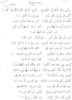
Al-Azhar Fatwa on Desecration of Graves
| Date uploaded | 13 February 2013 | |
| Description | This is a fatwa issued by the al-Azhar fatwa department on 24 October 2011 responding to a question regarding the permissibility of the destruction of graves. The fatwa states that Islam prohibits transgression against the sanctity of the deceased and it is therefore not permissible to dig up their graves. In addition, the removal of any corpse from its place or from the mosque in which it is buried, especially the graves of the saints, the pious, martyrs and scholars, destroying its distinguishing marks by flattening it to the ground or destroying whatever is above it is prohibited according to the sacred law - no matter under which pretense it is done - and it is considered from amongst the major sins. |
|
| Acknowledgements | Translation of fatwa by E Moos |
|
| Date written | 24 Oct 2011 | |
| Region | North Africa | |
| Country | Egypt | |
| Period | 20th Century | |
| Subject | Admonition | General Advice | Law | Polemics | Politics | Religion | |
| Type | Report | |
| Record link | Permalink |
Images/Downloads
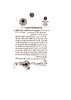

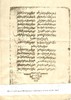
Badamasi’s Waka
| Date uploaded | 9 December 2011 | |
| Description | Oral poetry had been a feature of cultural expression among the Yoruba before Islam, and the same tradition was sustained under Islam in the enterprise of spreading the message of the faith and teaching its ideals among the natives from the 19th- century. The remarkable familiarity of the Yoruba Muslims with the Arabic language from this period inspired the employment of its alphabet for their language, and the earliest, surviving representation of this in the form of a paraenetic Islamic verse is to be attributed to Badamasi bin Musa Agbaji (d. circa 1891). The exemplars from this author demonstrate the strong influence of the classical Arabic poetical prototypes (qasida and rajaz), and indeed the impact of the Hausa waka model which had been popularized by the Sokoto jihad tradition of the 18th-19th centuries. |
|
| Acknowledgements | Amidu Sanni |
|
| Author | Badamasi bin Musa Agbaji (d. circa 1891) | |
| Region | West Africa | |
| Country | Nigeria | |
| Period | Colonial | |
| Subject | Admonition | General Advice | Poetry | Religion | |
| Type | Manuscript | |
| Language | Yoruba Ajami | |
| Record link | Permalink |
Images/Downloads